Discovery of Early and Middle Paleolithic Sites in Dehtal, Bastak: Traces of Early Humans in Southern Iran
سنگنگاره باستانی مرد آخوندکی در ایران کشف شد
اکتبر 22, 2025
کشف آثار پارینهسنگی در دهتل بستک؛ رد پای انسانهای اولیه در جنوب ایران
اکتبر 26, 2025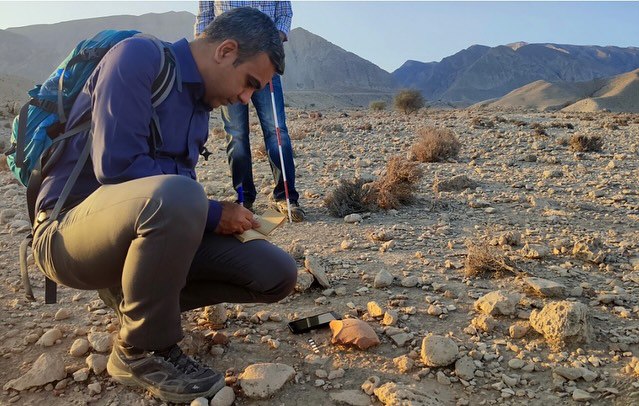
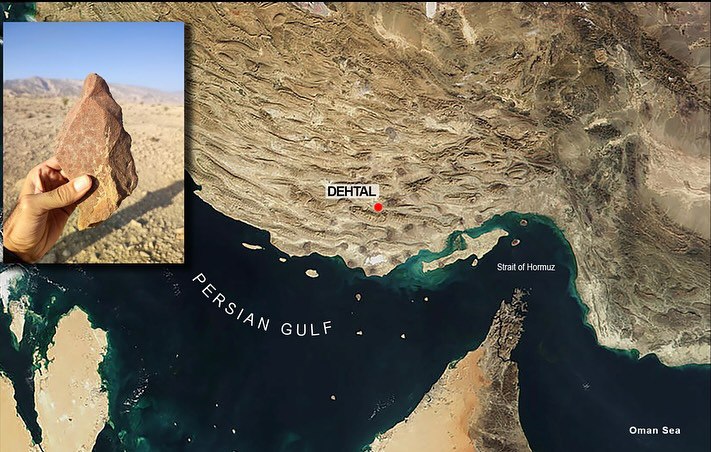
Archaeologists have uncovered evidence of Early and Middle Paleolithic occupation in the Dehtal area of Bastak County, located north of the Persian Gulf in southern Iran.
The survey, conducted under the direction of Sepehr Zarei, archaeologist and Deputy Director of Cultural Heritage of Hormozgan Province, was carried out with authorization from the Research Institute of Cultural Heritage and Tourism (RICHT) and in cooperation with the Hormozgan Provincial Department of Cultural Heritage, Tourism, and Handicrafts.
According to Zarei, the project aimed to identify traces of early human settlement in southern Iran. The fieldwork took place in two phases—from August to September and from October to November 2025—and included systematic surveys, detailed mapping, and documentation of Paleolithic surface artifacts.
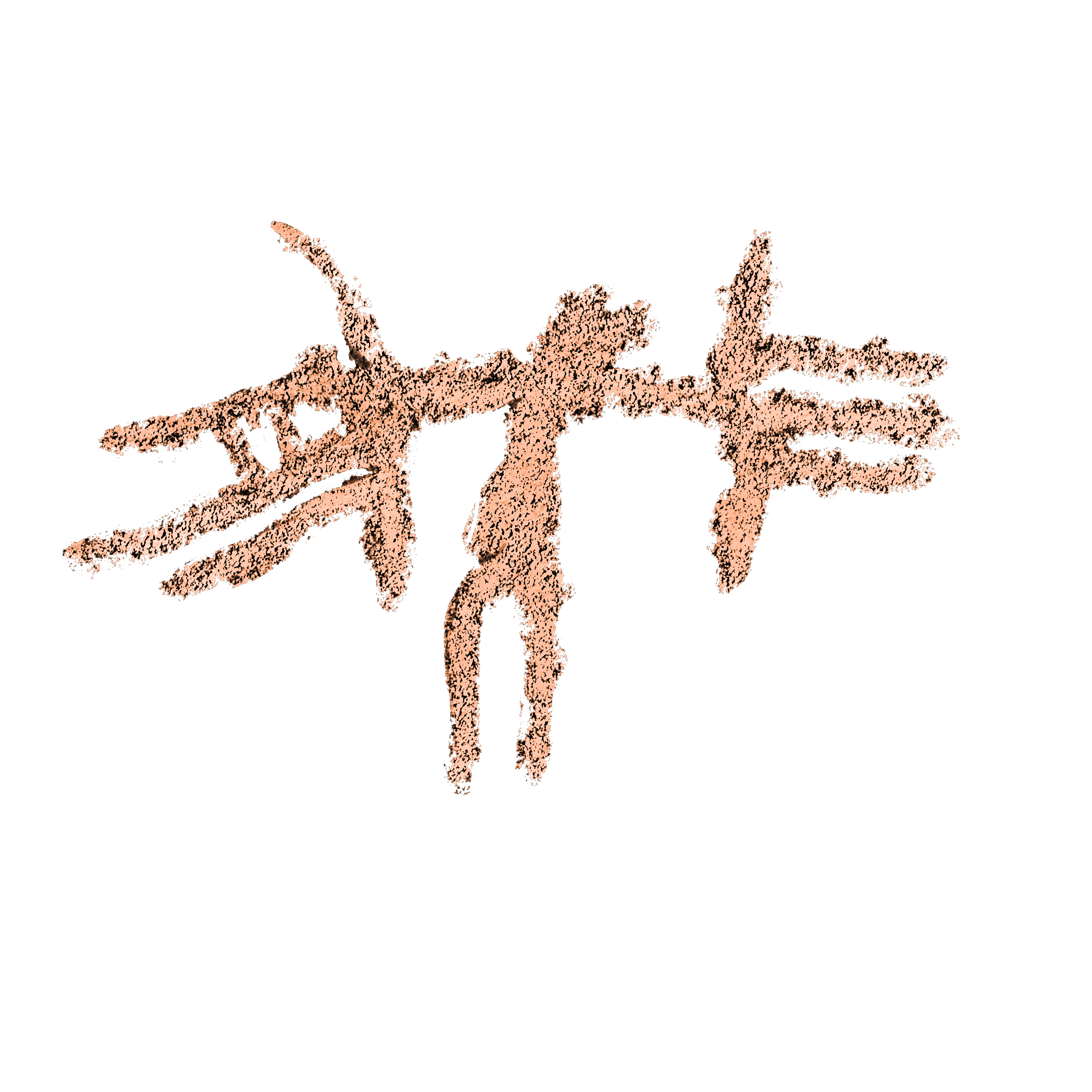
“The Dehtal site is best known for its rich assemblage of petroglyphs carved on large limestone boulders,” Zarei said.
“These engravings, created by prehistoric and historic artists, depict human and animal figures, abstract forms, and inscriptions in Pahlavi and later scripts.”
Preliminary investigations of the area, first carried out in 2010, revealed a wide scatter of stone tools south of the modern village and along the foothills of Mount Perlaver. The Dehtal site covers an area of about 400 hectares, located in the Goudeh district of central Bastak, approximately 80 kilometers north of the Persian Gulf coast.
The distribution of lithic artifacts indicates repeated human occupation during the Early and Middle Pleistocene—more than 200,000 years ago. The abundance of raw materials on the alluvial fans of Mount Perlaver provided favorable conditions for producing large Acheulean tools. Seasonal springs and water channels also appear to have played a ke y role in attracting early humans to this region.
Zarei explained that systematic sampling was carried out based on the topography of the site. “Artifacts were collected within 10×10 meter grid squares, and endangered zones were documented through photogrammetry before modern development,” he noted.
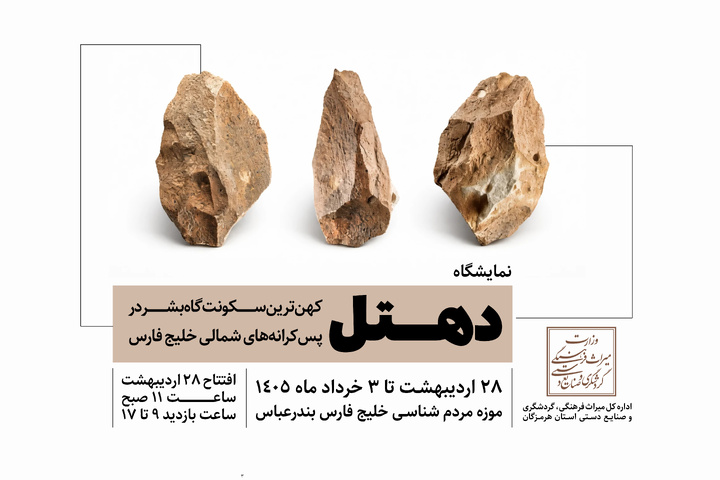
The team identified a range of large stone tools—including hand axes, cleavers, and heavy scrapers—typical of the Acheulean industry of the Early Paleolithic period. The research also integrated GIS mapping, remote sensing analysis, and geomorphological studies to understand site formation processes and raw material sources.
“Given its geographic position, access to seasonal water resources, and suitable lithic raw materials,” Zarei emphasized,
“Dehtal represents one of the key Paleolithic localities in southern Iran. The final results will be published following comparative and laboratory analyses with other Paleolithic sites across West Asia.”
He expressed hope that the findings will contribute to the national registration and protection of the Dehtal site, which is considered one of the largest Acheulean and rock art complexes in Iran.